Deputy U.S. marshal kept job, avoided jail after officers say he threatened them at Progreso bridge
Last year a deputy United States marshal from Harlingen who’d previously been lauded for his courage in a shootout found himself in a much less decorous position.
According to an incident report from the Hidalgo County Sheriff’s Office, Deputy United States Marshal Mario Antonio Loya spent the better part of two hours detained by U.S. Customs and Border Protection one evening last October.
Loya, 38 at the time, appeared to be drunk and failed to cooperate with officers while crossing the Progreso International Bridge on foot, cursing at them and threatening them after they detained him.
Despite his demeanor, law enforcement repeatedly tried to cut Loya a break and let him go.
Instead Loya insisted that he remain in his cell, determined to prove he’d been wrongly detained.
Ultimately, police were successful in doing Loya a favor.
A sergeant from the Hidalgo County Sheriff’s Office convinced him to leave his cell and drove Loya out of the county to his home, 21 miles away in Harlingen.
Loya rode in the front passenger seat.
Loya did face one consequence related to the incident: a public intoxication citation, though Hidalgo County Sheriff Eddie Guerra now says that citation shouldn’t technically have been issued at all.
“A FAVOR”
Loya was crossing the Progreso International Bridge with his wife and a couple of friends one Saturday evening last October when he got the attention of Customs and Border Protection Officers by trying to break one of the agency’s cameras.
He told officers he was a deputy U.S. marshal so he didn’t need to have his photo taken, the incident report says.
Eyes bloodshot, speech slurred and smelling of alcohol, Loya seemed drunk and became combative, so officers detained him.
After they learned Loya was indeed a deputy United States marshal, CBP officers offered to cut Loya loose and send him home with his wife.
Loya declined, saying that his rights had been violated and that he demanded respect — so his wife left him there.
Still, officers made an effort to get Loya home without any more fuss.
They called Daniel Flores, an assistant chief deputy U.S. marshal and Loya’s supervisor.
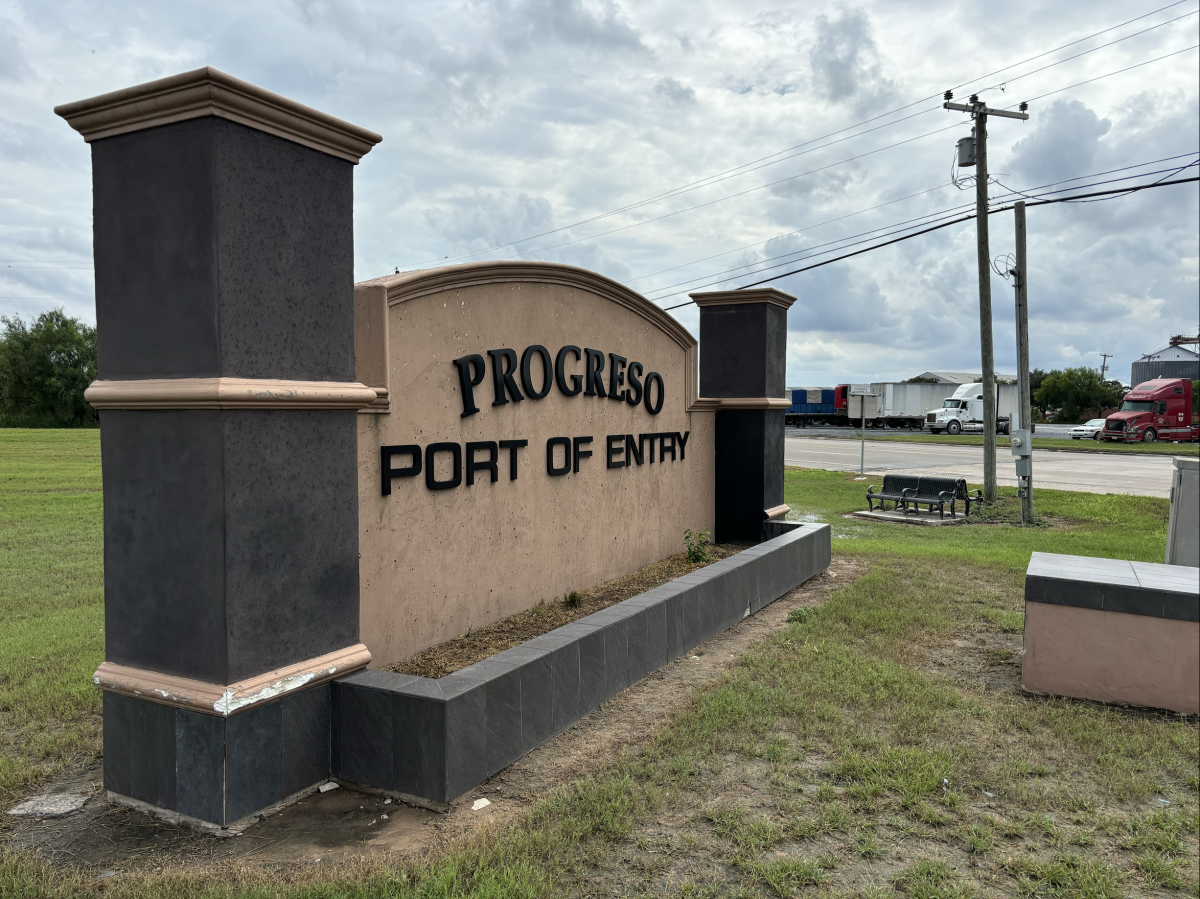
Flores drove down to the Progreso Port of Entry to pick up Loya, who once again refused to leave and cussed at his boss.
Loya cursed a lot that evening. According to an incident report, he threatened to “f – – -” up at least two CBP officers and called one a “p – – – -,” shouting other insults at them from his cell.
About an hour and 20 minutes after CBP officers had first detained Loya, they resorted to calling the Hidalgo County Sheriff’s Office.
Deputies arrived at a tense scene.
Loya was still angry and still appeared to be drunk.
Deputies decided to cite him for public intoxication, a class C misdemeanor, and finally convinced him to leave — though he did so slowly, demanding a pen and attempting to write down the names of CBP officers he felt had wronged him.
Footage of the incident shows Loya wandering around the holding room in his socks, pen in hand, before deputies got him to leave the building.
One CBP officer, called only Maniece in the report, appeared to lose his patience.
Maniece, the report says, called Loya “worthless” and a “clown,” filming him being walked to the deputies’ unit and suggesting Loya was receiving favorable treatment.
“These guys did you a favor,” Maniece told Loya.

More composed, Maniece told a television crew from the Discovery Channel about the possible ramifications of the incident once Loya was gone.
“The choices that this deputy marshal made today are gonna haunt him for the next days and the next weeks and months to come,” he said.
CBP declined to comment on the incident, citing “privacy reasons.”
Loya didn’t appear all that concerned that night.
“And I will hold everybody accountable,” he said while detained. “Whether they fire me from my job, I don’t care.”
As of last Wednesday, Loya remained a deputy U.S. marshal, according to a spokesperson for the service who otherwise declined to comment.
A FREE RIDE
In Texas, police can cite a person for public intoxication and release them into the care of an adult who agrees to assume responsibility for them, provided that the intoxicated person doesn’t appear to be a danger to themselves or others.
In theory, someone who’s cited for public intoxication and doesn’t have someone agree to take care of them should wind up in jail.
In practice, the Hidalgo County Sheriff’s Office really doesn’t like booking drunks into its already overcrowded jail.
“We don’t take public intoxications to the county jail because there’s no room for them. I want room for more violent offenders,” Guerra said.
Guerra says very drunk people — who jailers have to “babysit” — can sometimes be an exception to that rule.
Sergeant Jesse Trantham, who drove Loya back to his home in Harlingen, doesn’t appear to have released him into the custody of another responsible adult.
The incident report simply describes Trantham watching Loya walk inside his house before he returned to his patrol unit and headed back on patrol.
“I think by that time he was already to where he wasn’t a danger to himself,” Guerra said. “By the time he got there — and he was sitting in the drunk tank for two hours — by the time they took him to Harlingen that’s some more time. And I’m sure the sergeant realized he was not a danger to himself anymore.”

Guerra also referenced Loya’s past when describing Trantham’s decision to drive him to his home instead of jail.
A report from the Marshals Service indicates Loya was one of three people shot by Eduardo Zamora at a convenience store in Harlingen in 2021, taking a bullet in the shoulder and returning fire.
Zamora died in a gunfight in Mexico days later. The shootings made international news and the National Association of Police Organizations later recognized Loya for his courage.
“It was the sergeant’s call. I’m not gonna question the sergeant in doing him a favor and dropping him off,” Guerra said.
Other aspects of the incident have played out favorably to Loya too.
Since he didn’t spend the night in jail, the sheriff’s office didn’t take a mugshot of him.
Deputies did record body camera footage of the incident, which the Progress Times requested through open records.
CBP, however, is asking the Texas attorney general to prevent the release of all 18 minutes and 35 seconds of footage because, its attorneys say, releasing that footage could disclose investigation techniques that could “risk the circumvention of law.”
CBP doesn’t want that footage to be released despite footage of the incident — with Loya’s face and name obscured — being aired on the Discovery Channel program “Contraband: Seized at the Border,” which has detailed the organization’s investigation techniques to a national audience for five seasons.
The most significant consequence Loya appeared to face was his citation for public intoxication from deputies, though that citation may rest on shaky ground.
According to Justice of the Peace Precinct 1 Place 2 Jesus Morales’ office, Loya has pleaded not guilty and is demanding a jury trial.
No hearing date had been scheduled as of Monday and Loya didn’t return requests for comment.
Hidalgo County Sheriff Eddie Guerra said Tuesday that deputies never should have cited Loya.
The Progreso bridge is owned by a private company. Guerra says that means the bridge isn’t public, and his deputies can’t technically issue public intoxication citations there.
“Some of the deputies don’t know that it’s a private facility, private bridge. Not all of them are up to date on that,” he said.
Whether or not the bridge is public and what to do about disorderly drunks using it is a persistent problem.
Last year CBS 4 reported that Guerra had directed deputies that January to refrain from arresting Progreso’s then-mayor and school board president after they appeared to be driving across the bridge drunk.
Instead, deputies cited them for public intoxication, citations later downgraded to warnings.
The logic behind those decisions, Guerra said at the time, was that the bridge wasn’t public.
Guerra doubts the bridge constitutes a public place in Loya’s case either.
“That’s up to the district attorney or the prosecutor, whether he wants to drop the charges, because I don’t think the elements of the crime — one of the elements of the crime is that it’s got to be in a public place,” he said.