Board votes to close Zapata Elementary, launch ACE program
Emiliano Zapata Elementary is in its final semester at La Joya ISD. At the Jan. 29 meeting, the board of managers voted in favor of closing the campus after this school year and launching a complete academic restructure for Evangelina Garza and Juan Seguin elementaries.
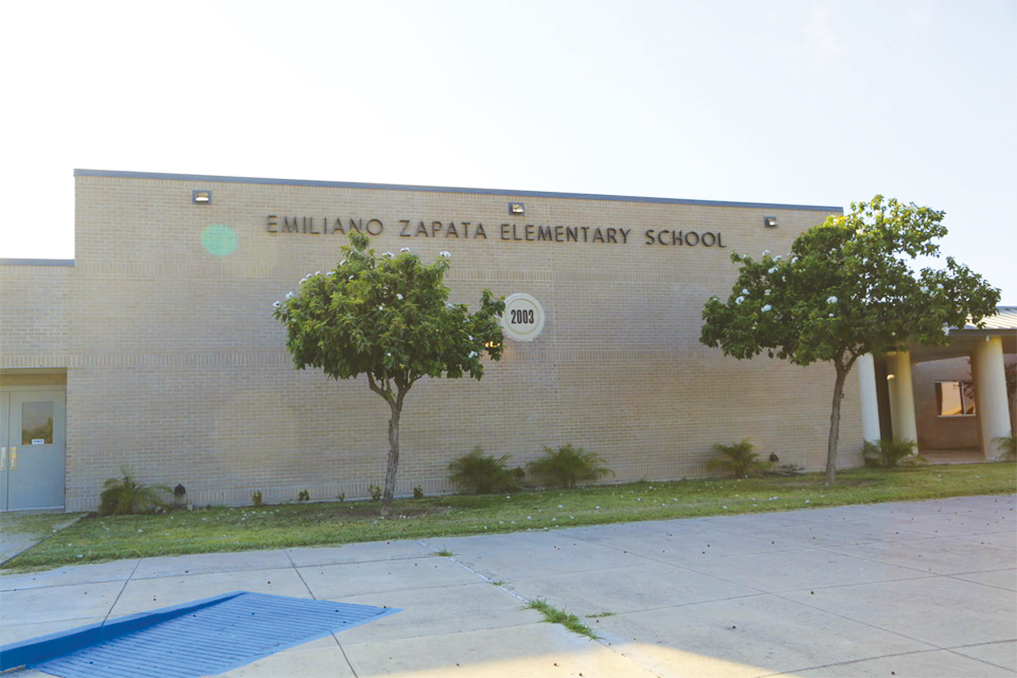
Zapata Elementary
In December, the chief staff proposed closing Zapata Elementary and splitting the students between Garza and Seguin Elementary. Chief of Academics and School Leadership Dr. Derek Little presented the proposal at the Dec. 11 meeting, citing low academic performance, loss of enrollment and aging facilities as the reason for the decisions.
When the board approved the resolution to close Zapata Wednesday night, they also initiated what the district calls a restart for Garza and Seguin. In the 2025-26 academic year, the two campuses will follow the Accelerated Campus Excellence (ACE) model for three years — a program that targets rapid improvement in student learning. ACE is a program several school systems in Texas have implemented when their campus scores have fallen below a C rating. Zapata, Garza and Seguin all have D or F ratings from the state and have shown a significant decline in performance over the last two years.
“The data shows that, at best, we’re getting 30% of students meeting grade level,” Little said. “Let’s understand what that actually means for our students. If I’m a third grade student sitting at Garza right now, that means that I don’t have the ability to engage with a paragraph of text. If I really want to pick up a comic book or pick up a book that I get at the library or I see somewhere else, I’m not going to be able to understand what those symbols and words are on the page.”
He explained that third grade is the pivotal time when students go from just knowing symbols on a page to understanding literary elements and using decoding skills to reach comprehension.
“And right now 70-plus percent of the students at these schools cannot do those skills. That is something that we cannot accept as the best we can do. And that is the biggest basis of why we are making this proposal this evening,” the chief said.
Under the ACE program, nearly 80% of the schools earned an A or B rating from the state within two years. Little said La Joya ISD is hoping for the same.
Since the initial proposal in December, many community members expressed disapproval over the proposed changes through public comment, on social media and with an online petition urging the board to vote against the changes.
“It is vital to remember that our students are not mere statistics. They are unique individuals with distinct needs. Implementing these changes will impose unnecessary challenges on them,” Claudia Garcia said at the Jan. 15 meeting, speaking on behalf of the Seguin community. “Our focus should remain on supporting and nurturing each child’s unique strengths and potential.”
The district said they have been in contact with the affected families and employees since before the winter break, holding seven town hall gatherings between the initial proposal and the board vote. Little reported almost 300 people attended the community meeting regarding Zapata Elementary, with more than 200 individual families represented in the conversation.
After hearing from the families, he said the primary concerns center around loss of community. At the Wednesday night meeting, he explained that while the district understands the changes will disrupt families and students, they believe it is necessary to better the students.
“This is a pursuit to do the best that we can for the students at those schools,” Little said. “But it’s not at all against the indictment of that community or against that faculty and staff. This is a structural change that we have to pursue to get the best outcomes.”
The district has a page on the La Joya ISD website dedicated to Elementary Planning 2025-26. It includes a Spanish and English translation of their presentation on Zapata, Garza and Seguin elementaries.