New group aims to organize South Texas school boards
A new nonprofit organization is asking South Texas school districts to pitch in money to form a confederation of school boards in the area focused on advocating for regionally specific needs and better equipping trustees to serve their communities.
School boards in the Rio Grande Valley began voting on whether or not to join the nascent South Texas School Board Association earlier this month.
The organization doesn’t have a running list of which boards have voted on joining but at least two — Weslaco and PSJA — signed up earlier this month.
At least two more, Edinburg and Lasara, weighed joining but delayed making a decision until they receive more information.
Several other districts are expected to consider signing up next week and more are anticipated to do so down the road.
Organizer Ruben Cortez, who previously served as a State Board of Education member and currently sits on the Region One Education Service Center board, said trustees in the region have long talked about the need to collaborate on issues specific to South Texas.
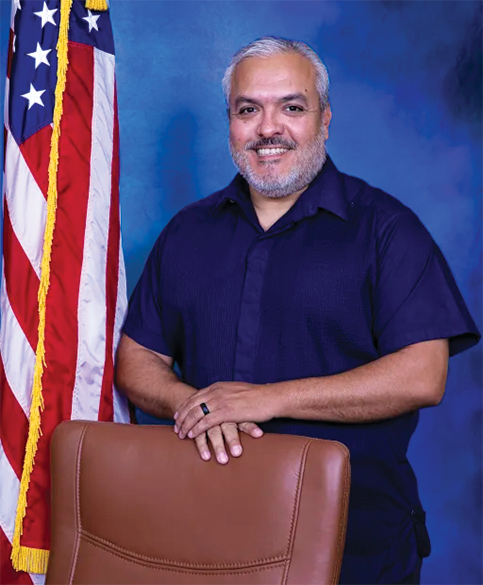
“South Texas wants to create its voice,” he said.
The South Texas School Board Association means to create and channel that voice.
A document the group shared with area districts describes the association’s goals as being part think tank, part advocacy group and part networking facilitator.
It’s going to aim at turning the concerns of local boards into legislative action in Austin while essentially helping boards operate smarter and more effectively locally.
“It’s gonna develop and elevate regional priorities,” Cortez said. “Ensuring South Texas is seen, that it’s heard, that it’s respected at the capital. We’re going to ultimately be hosting trainings, boot camps, and peer learning opportunities to equip trustees to lead effectively and boldly. We’re gonna have pressers, media strategies.”
One voice for trustees in the region, Cortez said, will be stronger than individual boards advocating for issues independently.
Particularly, Cortez says, the group means to advocate for student equity and budgetary issues impacting local districts.
“If you’ve written one story too often, it’s budget struggles,” he said. “Every district is going through budget issues. Why? You know why. The legislature’s holding back money.”
The group also wants to develop a network of aligned vendors and policy allies.
The association plans to form a board with a president, vice president, secretary and treasurer, along with member-elected regional members from Cameron, Willacy, Hidalgo, Starr, Zapata, Webb and Jim Hogg counties.

It will be helmed by an executive director.
Cortez says that structure is flexible and may be altered based on what members decide.
“That can be fundamentally changed when the first executive team of this new association meets,” he said.
South Texas school boards won’t join the association for free.
The association will charge districts annual dues based on size.
It will cost smaller districts between $1,000 and $1,500 to join.
Medium sized districts — districts with between 2,000 and 27,999 students — will pay 77 cents per student based on average daily attendance.
South Texas’ largest districts, those with at least 28,000 students, will pay a flat rate of $20,000.
Trustees have differed on whether those dues are a good investment.
PSJA agreed to a $20,000 commitment to the group Monday.
Trustees described the dues as money well spent on being better understood and listened to by lawmakers in Austin.
“I think it’s about time that they listen to many of the concerns and issues that we face here,” Trustee Yolanda Castillo said.
Some trustees in other districts weren’t ready to commit.
Trustee Dominga “Minga” Vela in Edinburg said Tuesday that she’d need more information on the nuts and bolts of the association’s plans before she would support joining.
She wasn’t convinced any of the services the association is planning on offering are services the district can’t find cheaper — or free — elsewhere.
“I am very concerned about the money issue,” Vela said.
Other entities do perform similar services to the platform the South Texas School Board Association is pitching.

The Texas Association of School Boards, for example, is a popular vendor of training and resources for Valley districts.
Cortez says TASB has significant drawback: it’s not based in the Rio Grande Valley.
“So when they go out and create their legislative platform, it’s at a 30,000 foot view,” he said. “But TASB doesn’t understand the reality of a border town. They don’t understand what’s happening in Donna or in Edinburg.”
South Texas does have one regionally specific group somewhat similar to the new association: the South Texas Association of Superintendents.
That group represents about 50 districts that have about three quarters of a million students enrolled in them, its Board President Alejos Salazar said.
Generally, Salazar says, his organization gets active when the legislature is in session, picking a couple of priorities to push for in Austin.
Typically those priorities deal with finances and the group usually stays under the radar, though it did make headlines pushing for funding reform at South Texas Independent School District in 2023.
It’s also usually helmed by a paid director, though that position is currently in limbo.
The Association of Superintendents charges more modest dues than the new School Board Association.
It charges flat fees of $400 or $800 for small districts and 40 cents per student at districts with more than 2,000 students.
Salazar says he anticipates the organizations complementing each other and possibly collaborating.
“I don’t know if there will ever be — not a marriage — but some sort of engagement or dating down the road between their organization and ours,” he said.