
Mission PD deploys controversial license plate reader program
The Mission Police Department is the latest agency to use software that collects footage of license plates from cameras within the city. Since the technology became more accessible in recent years, law enforcement bureaus throughout the country began using license plate reader (LPR) programs like the one at Mission PD. But residents in other communities continue to raise privacy concerns.
With the new program, Mission PD uses Motorola L6Q cameras mounted along roadways and on squad cars. The cameras capture license plates in the area and then store the data in what is known as the Vigilant database that officers can access. From there, they can search for a complete or partial plate number based on a particular location. Users can also filter searches based on vehicle year, make and model, and date and time. Every five years Mission PD has to renew the licensing.
The RGV Texas Anti Gang Unit funded the license plate reader project with a $6.5 million grant. Several Texas law enforcement agencies are part of this specific license plate reader program, and anyone in those agencies can access the data.
Mission City Council unanimously approved the program at the June 26 meeting without discussing any concerns. Chief Cesar Torres said it is a “big game changer for the city of Mission.”
“This is a very important program that is going to assist our citizens who are victims of crimes,” he said.
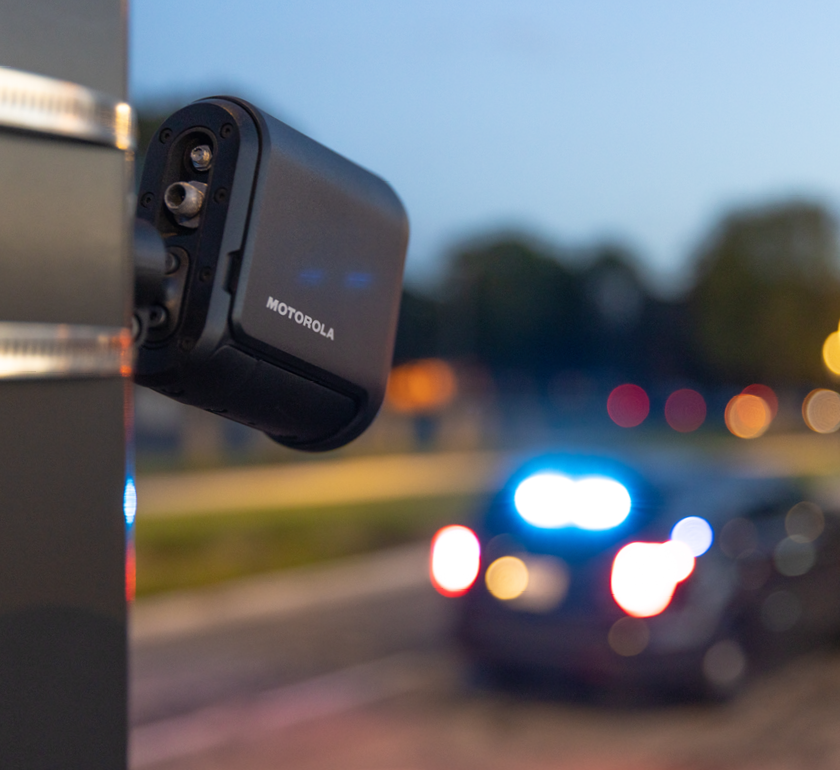
Courtesy photo – Motorola L6Q camera
At the meeting, the chief said the department received 15 cameras with more on the way. According to the resolution, the L6Qs will be pole-mounted on the intersections of Breyfogle and Business 83, Tx 107 and FM 495 and Business 83 and FM 494 in Mission. Torres said Mission PD will only use the database to aid in investigations for “serious offenses,” such as kidnapping and stolen vehicles, but not minor offenses, such as parking tickets.
But the pushback in other areas stems from the lack of state regulation, the round-the-clock surveillance regardless if people have committed a crime and data privacy issues.
The City of Austin just approved a year-long pilot program for an LPR called Flock Safety for Austin PD. But the council required APD to seek input from residents before deployment. The city leaders initially approved the program in September 2022 in a nonunanimous vote but gave the final OK in June after months of conversation with privacy and criminal justice advocates.
Under the agreement, Austin PD must provide regular reports to city commissions and council members, limit personnel access to the readers and have audits for the program. The city council will reevaluate the program after one year. Additionally, APD will hold the data from the scanners for seven days, despite council members initially debating 30-day retention.
The Mission PD chief said he is still writing the policy for the local LPR program, but it will include the directive to store data for five years. However, unlike Austin PD, Mission PD does not have to present the policy before city council for approval.
But the concerns for license plate readers occur outside Texas, too.
In February, Virginia lawmakers immediately killed two bills that would have expanded the use of LPRs due to “mass surveillance” concerns.
Last year, the Douglas County Sheriff’s Office in Omaha, NE pulled a proposal to install 10 Flock Safety cameras throughout the city after a lack of support from the community and council over worries about data privacy. Nebraska state law requires agencies to purge data within 180 days unless needed for an investigation or prosecution.
New Hampshire passed one of the strictest laws surrounding license plate readers in 2016 following concerns of improper conduct. The state limits data retention to only three minutes, and all LPRs must be under the control of an officer, meaning the police agencies cannot fix cameras at intersections like Mission PD plans to do.
But the Mission PD chief said the department has protocols to ensure officers are not abusing the system.
“This is not to see where people are going or coming; this is to assist our victims of crimes so that we can focus on solving crimes. That’s what the system is for,” Torres said. “We don’t want to know where people are going or coming. We want to know where the criminals are committing crimes and we want to solve those crimes.”
He continued to stress the need for the tool.
“The Mission police department is going to continue to integrate programs, all kinds of programs that will reduce our crime rate and keep our citizens safe,” the chief said.


I just read your article and decided to research this system. Did you know that a kechi police officer was found guilty using this system to stalk his es wife? You can google it. It is scary to know anyone who’s got access to this system can just look up your location. And God only knows what they may have in mind
These license plate readers are an excellent idea. Would be great if the county woke up and considered some of these.
You’d like the country a little more woke wouldn’t you.